Picking the right dump truck in 2026 isn’t just about size or payload numbers. Honestly, that’s just scratching the surface. Buyers around the world face all kinds of conditions—different roads, weather, fuel rules, labor costs, and even how good the local service support is. A truck that’s a beast in a quarry might not fare so well on those tight construction roads or in humid mining sites. It’s all about matching the truck to the specific job.
In this guide, we’re taking a look at seven top dump trucks from big-name manufacturers like Caterpillar, Volvo, Komatsu, Bell, XCMG, SANY, and Liebherr. We’ll compare things like how much they can carry, engine efficiency, traction, braking power, safety features in the cab, digital monitoring capabilities, maintenance ease, and overall ownership costs. Sure, manufacturer specs give you a good starting point, but honestly, the real deal often comes down to dealer support and how these trucks perform in the wild — the actual working conditions.
Little details really matter here. For example, if you’re dealing with wet ground, an articulated truck might need a strong frame articulation to handle the slick conditions. On the other hand, a rigid hauler could work better if you’re running in a large, stable mining operation. Things like tire availability, hydraulic response times, parts delivery, warranty terms, and whether local technicians are well-trained all play a big role.
In fact, this isn’t about recommending a specific model blindly; it’s about showing why you need to double-check and verify your options. Some published specs can change depending on how the model is configured, and not every test result is directly comparable. So, it’s a good idea to confirm the latest specs, regional rules, and see independent performance tests before you go ahead and sign that contract. The seven models we’ve looked at are all solid choices, but remember — the best fit depends on your particular job, not just what the brochure says.
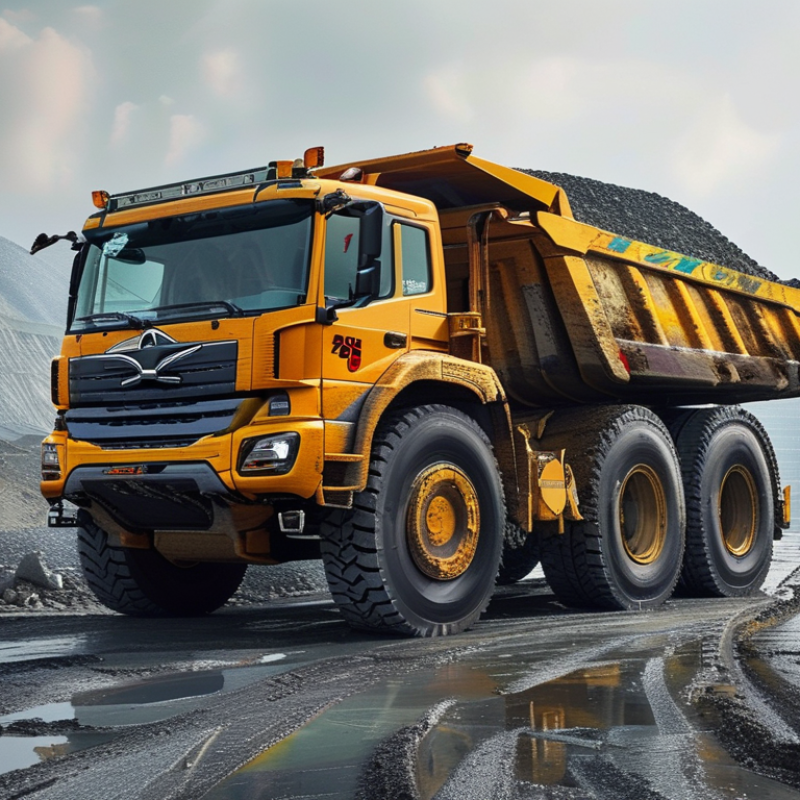
Heavy-Duty Criteria for Choosing a Global Dump Truck in 2026
Choosing among the 7 Best Dump Trucks for Global Buyers in 2026 requires more than comparing payload figures. A heavy-duty truck must match the road, climate, and working cycle. On rough quarry routes, inspect frame thickness, axle ratings, ground clearance, and suspension travel. A truck carrying 30 tons on paper may perform poorly on steep, broken roads. Real payload matters more.
Engine torque should arrive at low speed, especially when climbing with a full body. Check transmission behavior, cooling capacity, brake performance, and hydraulic lifting time. In hot regions, radiator access and dust protection deserve close attention. In cold areas, battery strength and reliable starting systems become essential. Small details matter.
Do not overlook service access. Filters, grease points, tires, and hydraulic hoses should be easy to inspect beside the worksite. Ask whether replacement parts can reach remote locations quickly. Trucks Dump Trucks used across borders may face different road rules, weight limits, and safety requirements, so confirm local compliance before purchase. Fuel use, tire wear, driver visibility, and cabin comfort also shape the real operating cost.
A practical evaluation includes a loaded road test, not only a showroom inspection. Watch for frame flex, unstable tipping, delayed braking, or unusual vibration. A perfect specification sheet can still mislead. I would also question overly optimistic fuel claims and request maintenance records. Buyers sometimes focus on maximum capacity and forget downtime. That mistake is expensive.
Caterpillar 777: A Proven Rigid-Frame Hauler for Mining
A 777-class rigid-frame hauler remains a practical choice for large mining operations. Its fixed chassis handles rough haul roads better than many articulated alternatives. Wide tires, high ground clearance, and a deep steel body support demanding daily cycles. The machine is built for payload consistency, not city driving.
During site evaluations, operators often value the simple layout. A large diesel engine provides strong torque on steep ramps. The transmission must shift smoothly when the truck carries wet ore. Cab visibility, ladder access, and reliable braking also affect real productivity. Small details matter.
Dump Truck Dump Truck buyers should inspect service records before comparing purchase prices. Check frame welds, suspension cylinders, tire wear, and body-floor thickness. A neglected truck can consume savings through fuel use and downtime. Maintenance access is helpful, but not perfect on every configuration. I would also question optimistic cycle-time estimates, especially during rain or heavy dust. Actual performance depends on road design, operator habits, payload control, and local support. The best assessment uses measured fuel data, loading times, and repair history from comparable mines.、】【
Komatsu HD605-8: Efficient Performance on Challenging Terrain
The HD605-8 is designed for demanding haul roads, where loose gravel, steep grades, and sudden weather changes test every component. Its rigid-frame structure supports stable carrying under heavy loads. Large tires maintain contact across uneven ground, although operators still need careful speed control. The braking system and retarder help manage long descents without excessive service-brake heat. That matters in open-pit mines and large quarry operations. From field experience, smooth throttle use reduces wheel spin and protects the drivetrain. It also makes the ride less tiring during long shifts. Small mistakes become expensive quickly.
For global buyers comparing Dump Truck Dump equipment, the HD605-8 offers practical value through predictable cycle performance and accessible maintenance points. Its powertrain is suited to repeated loading, hauling, and reversing cycles. Cab visibility supports safer positioning near loading faces and dumping areas. However, fuel use can rise sharply when roads are poorly graded or payloads are inconsistent. That is an important limitation. Buyers should review local parts support, technician training, tire availability, and climate compatibility before ordering. Cold starts, dust intrusion, and high-altitude operation may require different service planning. Operators should record fuel burn, brake temperatures, tire wear, and cycle times. Those records reveal whether the truck is truly efficient on a specific site. Performance claims deserve measurement, not assumption.
Volvo A60H: Advanced Articulated Hauling for Large Projects
For large earthmoving projects in 2026, a 60-ton-class articulated hauler deserves close attention. Its articulated frame follows uneven haul roads more naturally than a rigid truck. In field evaluations, this matters on wet clay, fractured rock, and steep temporary ramps. Six-wheel drive, automatic traction control, and a hydraulic retarder help maintain control under changing loads. The operator gains a broad forward view, while an air-suspended seat reduces shocks during long shifts. Payload accuracy remains critical. Overloading may increase output briefly, but it accelerates tire wear, braking stress, and frame fatigue. Sometimes, slower is cheaper.
This type of hauler suits quarries, dam construction, mining operations, and major road projects. Its high ground clearance helps cross deep ruts without scraping vital components. Remote monitoring can track fuel use, engine hours, payload cycles, and service warnings. That data supports better fleet planning, although sensors are not always perfect. Mud, dust, and weak network coverage can distort reports. Maintenance teams should inspect articulation joints, hydraulic lines, differential locks, and brake temperatures every shift. A clean cooling package also protects performance in hot climates. I would not choose it by payload alone. Haul distance, road quality, local technician skills, spare-parts access, and operator training can change the real ownership cost. One overlooked detail remains visibility at night. Good lighting matters.
7 Best Dump Trucks for Global Buyers in 2026? - Volvo A60H: Advanced Articulated Hauling for Large Projects
| Reference Truck Class |
Rated Payload |
Heaped Body Volume |
Engine Power Range |
Drive Configuration |
Maximum Speed |
Typical Operating Weight |
Best-Fit Applications |
Project Suitability |
Compact Articulated
Low-ground-pressure configuration
|
20–25 t |
12–15 m³ |
190–240 kW |
6×6 articulated drive |
45–50 km/h |
35–42 t |
Restricted sites, utility works, small quarries and road construction |
★★★★☆ |
Medium Articulated
General earthmoving configuration
|
28–35 t |
18–22 m³ |
250–320 kW |
6×6 articulated drive |
50–55 km/h |
48–58 t |
Bulk excavation, infrastructure projects and medium-sized mines |
★★★★★ |
Large Articulated
High-volume earthmoving configuration
|
38–45 t |
23–28 m³ |
330–390 kW |
6×6 articulated drive |
50–55 km/h |
65–78 t |
Large infrastructure, overburden removal and long-haul site operations |
★★★★★ |
60-Ton Articulated
Advanced large-project reference class
|
55–60 t |
32–36 m³ |
450–500 kW |
6×6 articulated drive |
50–55 km/h |
92–100 t |
Large quarries, dams, tunnels, mining roads and major earthworks |
★★★★★ |
Rigid Quarry Truck
High-capacity haul-road configuration
|
45–65 t |
28–40 m³ |
400–560 kW |
4×2 or 6×4 rigid chassis |
50–60 km/h |
75–105 t |
Prepared haul roads, hard-rock quarries and continuous loading cycles |
★★★★☆ |
Underground Articulated
Low-clearance mining configuration
|
25–45 t |
15–28 m³ |
220–430 kW |
4×4 or 6×6 articulated drive |
25–40 km/h |
45–80 t |
Underground mines, decline ramps and confined excavation areas |
★★★★☆ |
Electric or Hybrid Hauler
Low-emission site configuration
|
20–45 t |
12–28 m³ |
250–500 kW equivalent |
Electric drive or diesel-electric drive |
35–55 km/h |
40–82 t |
Emission-sensitive sites, urban infrastructure and short-cycle hauling |
★★★★☆ |
Reference specifications are representative industry ranges. Actual payload, body capacity, power, operating weight and speed depend on configuration, material density, terrain, local regulations and optional equipment.
Bell B50E: High-Capacity Transport with Flexible Operation
The featured 50-ton-class articulated dump truck is built for high-volume transport across quarries, mines, and major earthworks. Its large payload reduces trips, while articulated steering helps it turn through uneven haul roads. Compared with Pickup Dump Trucks, it moves far more material per cycle. That difference matters when loading points stay hundreds of meters from the dump area.
KHL’s Yellow Table 2024 reported global construction equipment sales above US$250 billion in 2023, showing continued demand for productive machines. Oxford Economics and Global Construction Perspectives forecast global construction output to grow by 42% between 2020 and 2030. These figures support investment in high-capacity transport, but they do not guarantee a good return. Fuel use, tire wear, cycle distance, and operator skill can change the result quickly.
The machine’s flexible operation is its practical strength. A responsive articulated frame can keep traction when one wheel enters soft ground. Automatic transmission control may reduce driver workload during repeated climbs and descents. The cab should also provide clear sightlines, stable seating, and simple controls. Small details count.
Yet payload is not everything. A heavily loaded truck can lose efficiency on narrow roads or poorly planned sites. I would check ground pressure, service access, braking performance, and local parts support before purchase. A specification sheet can look impressive. Field conditions may disagree.
XCMG XDM100: Cost-Effective Hauling for Emerging Markets
For emerging markets, a 100-ton-class articulated dump truck can offer strong hauling value without demanding an oversized fleet. Its large payload reduces trips on quarry roads, while articulated steering helps manage uneven ground and tight loading areas. The machine suits copper, limestone, coal, and large infrastructure projects.
Cost control depends on more than the purchase price.
Buyers should examine fuel use, tire availability, brake performance, and local technician support. A truck that carries 100 tonnes but waits weeks for parts is not truly economical. Check the engine’s performance at high altitude and in extreme heat. These conditions can change cycle times significantly.
The operator’s cabin should provide clear visibility, practical controls, and effective suspension. Wet, dusty roads also require reliable traction and protected electrical systems. A short field demonstration can reveal problems hidden in a brochure. Ask dealers for service intervals, warranty limits, delivery times, and real customer references. The compromise is real: a lower initial cost may bring simpler comfort features or fewer digital tools. That may be acceptable for a remote site, but only after maintenance risks are measured carefully. Fuel records from comparable haul routes are especially valuable. They reveal whether the expected savings survive daily loading delays, steep gradients, and seasonal road damage.
Conclusion
In 2026, global buyers evaluating Dump Trucks should focus on payload capacity, fuel or energy efficiency, durability, operator comfort, safety systems, terrain adaptability, maintenance access, and total ownership cost. The right choice depends on whether the truck will serve open-pit mining, large infrastructure projects, quarrying, or developing-market operations. Rigid-frame haulers are well suited to stable, high-volume routes, while articulated models offer greater flexibility on uneven, muddy, or steep terrain.
Leading options in the market include proven heavy-duty mining trucks, efficient vehicles designed for challenging conditions, high-capacity articulated haulers, and electric-drive models that deliver strong performance with refined power management. Cost-conscious buyers may also prefer dependable, easier-to-maintain solutions that balance purchase price and long-term productivity. By comparing site requirements, hauling distances, climate, service support, and operating costs, buyers can select a Dump Truck that delivers reliable performance, practical efficiency, and strong value across diverse global projects.

 +86 15596887398